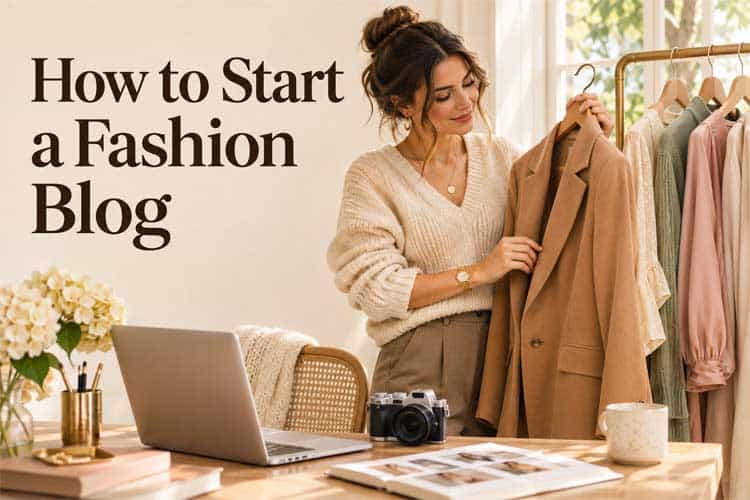
We already have a step-by-step guide on how to become a blogger, so in this article, we will focus specifically on how to start a fashion blog and what things you need to consider when embarking on this journey.
If you are one who is very passionate about fashion, starting a fashion blog could be a great idea.
According to a study made by Rank IQ, fashion is one of the more popular niches in the blogosphere… although, be aware, it is also a highly competitive niche.
* This post may contain affiliate links. Please read our disclosure for more info.
WHEN YOU START A FASHION BLOG – HERE ARE SOME FIRST STEPS:
1) CHOOSE YOUR FASHION BLOG NICHE
Before you choose a name or start designing your fashion blog, you will need to decide what kind of fashion content you want to share. Who are the people you want to help?
These things are the foremost considerations when starting any blog.
Fashion is a broad subject. Trying to cover everything from budget-friendly basics to upscale designer pieces can make it difficult to give your blog a clear identity. Choosing a more defined niche helps readers understand what they can expect from your blog and gives them a reason to keep returning.
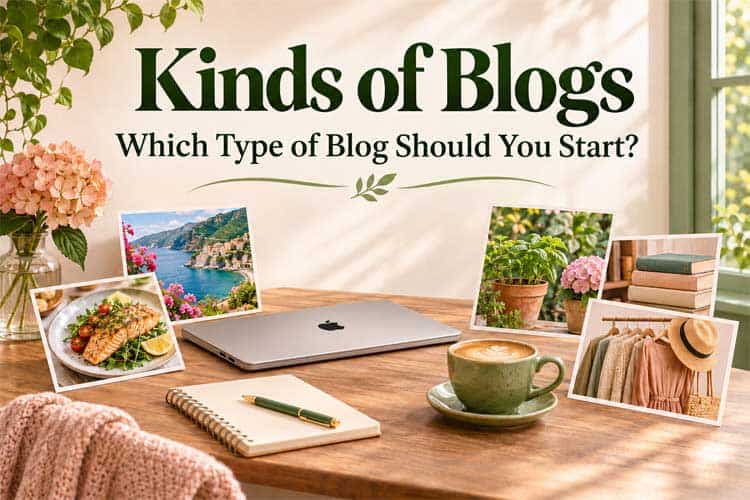
Your niche is simply the specific area of fashion you focus on. You might want to build your blog around your personal style, a particular audience, a budget, or a clothing need.
For Example, You Could Focus On:
- Affordable fashion: Help readers put together stylish outfits without spending a fortune.
- Fashion for women over 50: Share outfit ideas that reflect your readers’ tastes, lifestyles, and changing preferences.
- Petite, tall, or plus-size fashion: Offer practical advice on fit, proportions, and finding clothing that works.
- Sustainable and secondhand fashion: Cover thrift shopping, outfit repeating, clothing care, and buying more thoughtfully.
- Workwear: Help readers build wardrobes for office jobs, working from home, or business travel.
- Luxury fashion: Share detailed reviews, styling ideas, and firsthand experience with designer clothing and accessories.
These are only a few suggestions of possible fashion sub-niches, so choosing to become a fashion blogger definitely gives you a lot of options. You may also choose to combine some of these and be a multi-topic fashion blogger, as long as all content still pertains to fashion.
The best starting point is a subject you enjoy and have something helpful to share with your audience. You do not need to be a professional stylist, but you should be willing to share your own experience, take photographs, research questions, and keep learning.
Think about the fashion questions people already ask you. Do friends want to know where you find affordable clothes? Are you good at creating several outfits from a few basic pieces? Have you spent years figuring out which brands fit a petite frame? Those experiences can become the foundation of helpful blog content.
It also helps to picture the person you are writing for. “Women who like fashion” is a very broad audience. “Women over 50 who want comfortable, polished outfits at affordable prices” gives you a much clearer direction. You can immediately begin planning posts around everyday outfits, comfortable shoes, flattering jeans, and budget-friendly wardrobe essentials.
Before settling on a niche, try writing down 15 to 20 potential blog post ideas. If you struggle to get beyond a handful, you may need to broaden your focus. If your ideas feel scattered and unrelated, consider narrowing it.
You can also think ahead to products or services that would genuinely help those readers. Clothing, accessories, and wardrobe planners may fit naturally into your content. However, potential income should not be your only reason for choosing a subject. You need enough interest in the topic to keep creating useful content long after the excitement of starting your first blog wears off.
Choose a niche that gives your blog direction while leaving room to grow. You do not have to lock yourself into one tiny topic forever. Start with a clear focus, then let your experience and your readers’ questions help shape what comes next.
2) IDENTIFY YOUR TARGET AUDIENCE
Once you have chosen your fashion blog niche, the next step is to identify your target audience. These are the people you want to reach with your content.
Your niche defines what you write about. Your target audience defines who you are writing for. Understanding both will help you create posts that speak directly to your readers’ interests, needs, and everyday challenges.
For example, two blogs might focus on affordable fashion but serve very different audiences. One could help college students find inexpensive outfits for classes, internships, and social events. The other might help women who are 55 and older build comfortable, stylish wardrobes without overspending. Although the budgets may be similar, the clothing choices and advice could be quite different.
Start by thinking about your ideal reader’s daily life. What does she need to get dressed for? What makes shopping frustrating? What would she like to feel more confident wearing?
Some Useful Questions to Consider Might Include:
- What is their budget? Are they looking for bargains, investing in quality staples, or mixing affordable pieces with occasional splurges?
- What does their lifestyle look like? Do they work in an office, run a day care for young children, travel frequently, or spend most of their time at home?
- What fashion challenges do they face? Perhaps they struggle with fit, coordinating outfits, finding comfortable shoes, or dressing for a changing body.
- What matters most to them? They may prioritize comfort, convenience, sustainability, personal expression, or keeping up with trends.
- What kind of help are they seeking? Some readers want complete outfits they can shop, while others want to learn how to style clothing they already own.
Use your answers to write a simple description of the person you want to help. For example:
“I want to create a blog to help busy women over 50 put together comfortable, polished outfits using affordable pieces they can wear in several different ways.”
That description gives you a practical guide for choosing topics. A post about styling one pair of trousers in five ways would fit this audience well. Whereas, a roundup of expensive evening gowns might be less useful to them.
You do not need to invent an elaborate fictional biography for your ideal reader. Focus on the details that affect the advice you give, the products you feature, and the problems your posts help to solve.
You can learn more about potential readers by paying attention to questions in fashion communities, comments on relevant blogs, and conversations on social media. Look for recurring frustrations. If people repeatedly ask how to find jeans that fit at the waist without being too tight through the hips, that is a specific need you could address in a post.
As your blog grows, your own readers will become an especially useful source of ideas. Their comments, and responses to your content can help you understand what they want more of.
You do not have to appeal to everyone to build a successful fashion blog. Having a clear understanding of your audience makes it easier to create helpful content and give readers a reason to come back.
3) CHOOSE A DESCRIPTIVE AND/OR MEMORABLE NAME FOR YOUR FASHION BLOG
Choosing a name for your fashion blog is one of the more enjoyable parts of getting started. Your name gives readers their first impression of your blog and can help communicate your style, personality, or area of expertise.
The goal is to choose something memorable, easy to spell, and suitable for the blog you are building. If there are fashion keywords in the domain name… that is even better. When it comes to Search Engine Optimization… we can all use all the help we can get.
Start by writing down words that relate to your niche and the readers you want to reach. Words associated with style, wardrobes, clothing, color, or your personal approach to fashion can give you a starting point.
I would NOT suggest using your own name at this point in time. This only makes sense once you have become known as an authority in your niche, and people are actually searching your name online.
In the beginning it is best to use a descriptive name. This is much more helpful in giving new readers an idea as to what your blog is all about.
On the other hand, if you are more daring and maybe just slightly off-beat, you might want to choose a very unusual name… something fun and wonderfully memorable. This is what Chiara Ferragni did when she named her fashion blog The Blonde Salad. A very unusual name and also very memorable.
Once you have a few favorites written down, check whether the matching domain names are available. Your domain is your blog’s web address. Ideally, it should match your blog name closely so readers can find you easily. Always register the .com if available. If the .com is not available… check some of the other possibilities on your list.
All of these things and much more are explained in detail in my popular course:
* Blogging Step-by-Step
Before making your final decision, search for the name online. Look for existing blogs, businesses, and brands using the same name or something very similar. You don’t want to use something that may be Copyrighted… or something that may be too similar to another blog and cause confusion.
You don’t want something so similar that people inadvertently wind up on your competitor’s site instead of yours.
Read the following post that goes into more detail about domain names and registration.
* Registering a Domain Name for Your Blog
Once your domain name has been registered… you need to choose the best platform:
Best Blogging Platform – My Recommendations
Next, you will need to sign up with the hosting provider of your choice. The following post has more information as to website hosting:
* Best Website Hosting For Bloggers
GET READY TO START DESIGNING YOUR FASHION BLOG:
By this time you should have decided on a niche, chosen and registered your domain name, signed up for the web hosting of your choice, and installed WordPress through your hosting provider.
You are now ready to begin designing your fashion blog and bringing it to life. Your design gives readers an immediate impression of your style, but it also needs to make your content easy to read and explore.
Think about the audience you identified earlier. A blog about colorful thrift-store finds might have a playful appearance, while one focused on classic workwear might be better suited to a more understated design. Let your niche and personality guide your choices.
Choose a Simple, Flexible Theme:
Your theme provides the basic layout and appearance of your blog. Look for one that presents your photographs attractively, keeps text easy to read, and allows visitors to find their way around without confusion.
Before choosing a theme, explore its demo site on both your computer and phone. Open individual posts, try the menus, and check how photographs appear on smaller screens. A beautiful homepage is only one part of a useful design.
You can start with the free Kadence theme and consider using one of the beautiful child themes from Restored 316 Designs to make designing your site easier. Their themes have all been created to work on the Kadence framework.
Give Your Photography Room to Shine:
Photography will play an important role in showing readers personal styles. Choose a layout that displays outfit details clearly without making visitors scroll through oversized images to reach every paragraph.
Resize and compress photographs BEFORE uploading them so you can present attractive images without unnecessarily slowing down your site.
Use consistent image dimensions where practical. Always size images to the dimensions you will be using on the page. Then further compress the image file size in KB using a compression plugin such as Short Pixel.
Check the Design on Your Phone:
Before publishing, browse your blog as a reader would. Can you comfortably read the text without zooming in? Are links and menu buttons easy to tap? Do images fit within the screen?
Check that text has enough contrast against its background, and avoid placing important wording over busy photographs. Keep popups and other interruptions to a minimum so visitors can enjoy the content they came to see.
CHOOSE AN APPROPRIATE THEME FOR YOUR FASHION BLOG:
CREATE THEME

LIMONCELLA

SAGE THEME

The above themes are child themes.
They are used with Kadence theme as the parent theme.
The free Kadence theme, with Kadence blocks,
is a flexible, fast and versatile WordPress theme.
Child themes from Restored 316 Designs
are all designed to work on the Kadence framework
which makes customizing your WordPress theme easier than ever!
Additional Themes from Restored 316 Designs:
BROWSE COMPETITORS’ FASHION BLOGS TO DO SOME BRAINSTORMING:
Once you have decided on your niche and a name, and are moving ahead with creating your fashion blog, you need to find a few of your competitors and start browsing their websites. Browsing your competitors’ websites will give you insight as to what they are writing about and what sort of topics they are covering.
You certainly do not want to copy anyone else, but it is always a good idea to periodically browse your competitors’ websites. This helps you get an idea what others are blogging about. Once you have that information, it will be easier to figure out which topics you might like to cover as well and/or which topics you may want to avoid… at least for right now.
As a fashion blogger, you always want to create engaging, and unique fashion content for your readers. If your competitors are all covering a lot of the same things… this could be an indication these are popular things people want to read about.
However, you also might choose to throw in something completely different from what they are doing to make yourself stand out in the crowd.
AS A FASHION BLOGGER YOU NEED TO INVEST IN A GOOD CAMERA:
Fashion is one of those niches where having a good quality camera is pretty much mandatory. You can’t just write about fashion… you also need to complement your written content with a lot of high quality images. To be the best fashion blogger you can be and provide the best images for your readers… it just makes good sense to invest in a high-quality camera.
Adding videos and high-quality images to your blog will help make your point. It is always nice to be able to share a personal photo of you wearing an outfit you have suggested to others on your blog.
IT IS IMPORTANT FOR ANY BLOGGER TO REMAIN CONSISTENT:
Regardless of your niche, you always want to ensure your readers have a steady content stream. So often bloggers get started on the right foot… but then fail to remain consistent in their content creation.
Many fashion bloggers build an audience of people who love their blog and keep returning because they just can’t get enough of the wonderful fashion suggestions… and perhaps your charming wit as well. In a case such as this, it is important to remain consistent as you would not want to lose any of your returning visitors due to taking an extended period away from your blog.
This is why it is important to establish a blogging schedule and try to stick to it. Learn how to manage your time… allowing time for your business as well as family time and personal time.
MONETIZING YOUR FASHION BLOG:
I cannot impress upon you enough the importance of affiliate programs. I have been earning my living since October, 1996 with the use of affiliate links on my niche blogs. Finding some good affiliate programs is an excellent way to earn money in any niche.
As a fashion blogger… there are many fashion-related affiliate programs you can apply for like Anthropologie, Nike, and so many others for which you can become an affiliate.
A few of the affiliate networks that have done well for me are: FlexOffers, Rakuten, CJ and Impact.
At these affiliate networks, you can align with stores like Macy’s, Nordstrom and many more who have affiliate programs.
Creating and selling digital eBooks can also help monetize your blog. Along with a digital eBook… you may choose to publish your book as a physical book as well, in hardcover or soft cover. All of which you can sell on on Amazon. Feature your book on your site… and link to Amazon where they may purchase the book.
Monetizing a blog is not difficult. Experiment with some different ideas and see what works best for you.
Monetization is another topic that is discussed in more depth in our popular course:
* Blogging Step-by-Step
If you want to learn more about Affiliate Marketing.. read our post:
* Affiliate Marketing for Bloggers – A Beginner’s Guide
CONCLUSION:
Becoming a fashion blogger is not difficult, especially if you’re passionate about this niche. However, it does require you to take your time, narrow down your sub-niche, and always be sure you are creating high-quality content for your readers.
Take your time, create great content, and maintain a good sense of consistency while staying truthful and honest. Do that, and you won’t have a problem standing out among the other fashion bloggers.
FREQUENTLY ASKED QUESTIONS:
How to start a fashion blog for beginners?
Choose a specific fashion niche, such as affordable workwear, petite fashion, or secondhand style. Decide on a blog name, set up your website, and publish helpful posts with clear photos and practical styling advice. Start with clothes you already own and build a publishing routine you can maintain.
How to start a fashion blog and make money?
Start by creating useful fashion content that helps readers choose clothes, put outfits together, or solve styling problems. You can earn through affiliate links to products you recommend, sponsored posts, and your own digital products. Building traffic and reader trust takes consistent work, so allow time for your income to grow.
When you are ready to start a blog… all of these questions and much more can be answered in our best-selling course: Blogging Step-by-Step
About the Author: Sherry Bennett
Ms. Bennett is a Professional Blogger, who has been earning a living online with niche websites since October 1996.
Through hard work and dedication, she has turned her passion for blogging into a 7-figure business.. and you can do the same.
Read More
Have more questions? Need some answers?
Find me on Facebook:
Business Page: The Blogging Queen
Facebook Group: 7-Figure Professional Blogger – Sherry Bennett